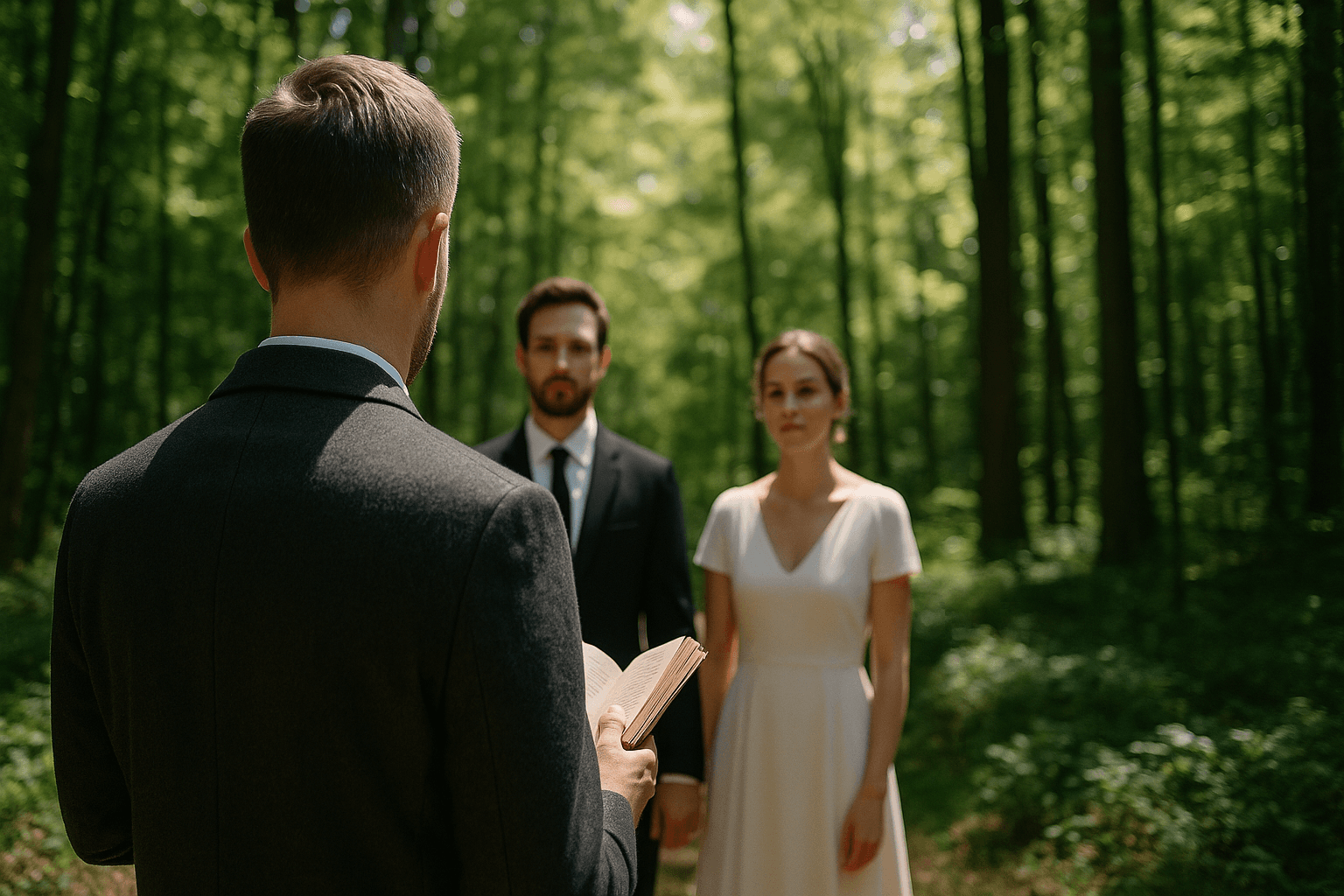
Officiating a wedding comes down to five steps: get ordained, check your state's rules, write the ceremony, run the day, and file the license. None of them are hard. All of them matter.
This is the quick version — the whole process on one page. If you want the deep-dive (what to ask the couple, rehearsal strategy, day-of checklists), read our complete guide to officiating a friend's wedding after this one.
1. Get ordained
You need to be a "minister" in the eyes of the state to legally sign a marriage license. The good news: the bar is low. Get ordained with Church of Pride for $20 and you're recognized for life. No coursework, no waiting period, no doctrine. We'll mail you a credential and email you a certificate.
2. Check the state's rules
Every state has slightly different requirements for who can solemnize a marriage. Some want you to register before the ceremony, some don't. Some accept any ordained minister; a few are pickier. Find your state on our Local Laws page — we keep a current breakdown for every U.S. state and most counties.
The thing to confirm before the day:
- Where the couple gets the license — usually a county clerk's office.
- The window — many states require the ceremony within 30, 60, or 90 days of license issuance.
- What you sign and where it goes — usually you sign, the couple signs, and one or two witnesses sign. You or the couple returns the completed license to the issuing office within X days.
3. Write the ceremony
A ceremony has three parts:
- The welcome — who you are, why everyone's here, a few words about the couple.
- The vows — the actual promises. The couple can write their own or use traditional language.
- The pronouncement — the legally-magical sentence. "By the power vested in me by the State of [X], I now pronounce you married."
Aim for 12–20 minutes total. Shorter is almost always better than longer. Read it out loud at least twice before the day — you'll find the rough spots only by speaking it.
Don't want to start from a blank page? Use our non-religious wedding ceremony script — it comes in 5-, 15-, and 25-minute lengths. If the couple is eloping, the elopement officiant guide covers the two-person version.
4. Show up early
Be at the venue 30 minutes before the ceremony. Find a coordinator, confirm the music cue, and ask where you should stand. Have the license folded into the back of your binder.
5. After the "I do"
Pronounce them married. Step back. Let them kiss. Let everyone clap. Walk back down the aisle behind them.
Then, within a quiet hour after the reception, sign the license. Do it carefully — most states require black ink and no corrections. The couple signs, the witnesses sign, you sign last. Drop it in the mail (or hand it to the venue coordinator if they're returning it) within the window the state requires.
That's it. You just married someone.